10/4/23

The Realities of the Author Life

Yesterday was a lot of fun. Tonight, we’ll come back to reality. What is it actually like to be an author?

Let me begin where I ended yesterday, which is to say every author is different. I can talk about my experiences and relay some of the things I’ve learned speaking to authors at various points on their career. But since every writer is different, every writer’s career is going to be different. Some of us move along similar paths, but what works for one person may or may not work for the next. Also, the profession has changed over time. There is no one-size-fits-all description for the author life.

As part of a presentation I put together for the Day Job, I looked up some numbers about writers. Only around 10% of people that set out to write a book actually finish. Of those, less than 10% publish. I don’t know how many people are able to sustain themselves on their writing career alone, but those numbers are painfully small.

It’s difficult to get into stores. You’re extremely unlikely to write a book that will find its way into a Walmart. It’s relatively easy to get your book onto Amazon with everyone else, but Amazon is only going to promote your book under very specific circumstances.

Like yesterday, let me paint a picture of what the author life is like for most writers.

As an author, you’re going to have a Day Job so that you can pay your bills and stay afloat. You may be passionate about writing, and you may be talented and driven, but the market is fickle and there is no easy guarantee of success. Whether you’ve put out one book or ten, it’s most likely going to be a struggle for you to live a comfortable, stable lifestyle based purely on the sales of your books.

You might have a Patreon. Lots of authors have those, these days. The extra income will help make your financial situation more stable. In fact, if you’re one of the few lucky authors that gets to quit their Day Job, Patreon might be the first step. But if you have your Day Job, don’t quit it just yet. When your job gets in the way of financial gains, you’ll know you’ve reached the point to take the leap.

Time never seems to be on your side. You may be working under a deadline. You might have a family that deserves your attention, or other hobbies that you rely on to maintain your mental stability. Finding a healthy balance is a constant shuffle. The author’s life is just a constant effort to keep all the plates spinning.

Some authors are doing very well. The superstar, ridiculously rich authors are basically lottery winners. You know their names, and there aren’t that many of them. But people that don’t know any better will compare you to their work, whether that comparison is favorable or not. You may dream of attaining their wealth or fame, but chances are, that’s not why you continue to write.

Authors write because that’s what we’ve always done. We enjoy it. We may want to support ourselves on our stories, but if we are wise, we will keep our expectations in check and just keep showing up to do the work.

It is work, by the way. The words don’t always show up on the page without a fight. Some writers make it look easy, but for most of us, we have to dig deep, unpack our adjectives, spelunk our mind palaces, and really push to get the right words to line up in the right order.

Some authors write every day. Good for them. Some write when they can squeeze it into their schedule. Some write for a couple hours at most a day. Some sit down and write until the coffee pot is empty, or when the sun has gone down, or when their spouse finally drags them away from their keyboard because they’ve been at it all day already and damn it, you said you were going to spend some time with me this evening and it’s already getting late.

Authors go long periods of time without getting the feedback they desperately crave. Authors are the camels of the art world, plodding along, carrying their own water, marching through the desert of isolation, hoping to find an oasis of sales and recognition before their resolve gives out.

It doesn’t happen to every author, but most of us forget whatever magic spell we wove in order to produce the previous book. Every time we start a new project, we have to learn how to write that story, because they all demand different nutrients in order to grow and thrive.

No matter how hard we work on a story, there will always be readers that don’t get it. Sometimes the criticism we receive is deserved. Sometimes, when the reader laid eyes on our carefully crafted story, they just weren’t in the mood.

For the most part, the author life is not glamorous. But it really is the life I want. And I’ll keep showing up to work, putting in the hours, because whether the rest of the world sees it or not, it’s who I am.

10/3/23

Romanticizing the Author Life

Today was another rough day. It went longer than it should have, and I still haven’t finished everything I needed to finish for the Day Job. So, tonight, let’s have some fun. Let’s indulge in pure fantasy and dive deep into the most outlandish dreams and notions people project onto the author life.

Authors don’t need to work for a living, really. They don’t need to wake up to an alarm clock. They are not required to go anywhere or do anything special for their job. They make up stories and live like rock stars. Better than rock stars. Musicians usually have to go on tour when they’re not in a studio. Authors can stay at home all the time if they want.

And why wouldn’t they? With the kind of money authors make, they can afford rambling mansions. Laundry? Cooking? Yard care? They have staff that take care of that. Sometimes, the author will spend the day in the pool. Maybe they’ll tinkle around on their grand piano. The writing happens eventually, but that’s really just an afterthought, since it’s so easy. At least, it’s easy for them. They made it where they did because of their gift.

They don’t have to stay at home, though. In fact, taking a year to go eat in Italy, pray in India, and fall in love in Indonesia is such a common activity for authors, they made a book and a movie about it. Traveling the world and seeing all the sites is a requirement for the author because how else will they fill their stories with vivid descriptions? The author life is a jet-setter’s life.

Kids dream of being astronauts, firefighters, or maybe the President of the United States. If they knew what I know, they’d dream of being an author. If you turn on the television and flip through a few channels, you’re sure to land on a based-on-reality show about an author that’s solving mysteries and fighting crime. Jessice Fletcher? Richard Castle? There are others, and it’s a common trope for a reason. Authors see the world differently than regular people, which makes them better at fighting crime than Batman.

Truly, is there anything an author can’t do? I don’t think so.

Obviously, this is why I’m so driven to change careers. I crave that rich lifestyle. It explains why people are interested in using artificial intelligence to write stories for them. If they can just get their foot in the door, surely all that author wealth will just start pouring in.

You basically don’t even need to do anything once you’re an author, you know. Look at George Martin and Pat Rothfuss. No one really believes that they stress over their unfinished work, right? There is no way that the weight of their respective series keeps them up at night. They’re unbothered by the voices of picky fans demanding they “get back to work.” They don’t need to work, anymore. They’re authors.

I cannot stress enough how low stress the author life is. You don’t spend any time whatsoever worrying about what people think of your writing. You move through life with complete confidence, knowing that all of your stories will sell always, and the audience will be there in line for your next book, without fail. Authors know their value. They know they’re the real-deal.

There are some authors that keep writing. Not because they have to, but because they want to. Fortunately for them, since they’ve finished at least one book, they know exactly what they’re doing on the subsequent books. Have you ever heard an author say something along the lines of, “I feel like I’ve completely forgotten how to write”? Me, neither!

Everyone respects authors and the choices they make in their stories. No one ever walks up to an author and says, “You know what you should do in your next story? Let me tell you.” When an author is talking to someone about the story their writing, whether it be a stranger or a loved one, the other person never stops them and asks, “Oh, when’s it coming out?” And authors always have a ready, intelligent answer for the question, “What’s your story about?”

This author experience I have described in great detail is universal and without exception. Any author reading this will back me up and tell you that this is entirely true. Authors either make it or they don’t, and their path to success is the same every time.

You can trust me on this, because if you click on the banner on my blog, or search my name on Amazon, you’ll find that I’m an author. Therefore, I’m something of an authority on this subject.

10/2/23

The Continuing Struggle of Being a Creative Person Working in a Technical Field

I hope that I don’t land on too many stereotypes here. It would be really easy. If I do, please know that I’m not trying to be hurtful or reductive. This is all coming from a good place.

Specifically, it’s coming from an exhausted place. I just finished a very long work day. It’s Monday, and I forced myself to log off my work laptop and switch to this other system so that I could write this blog post and not screw up my writing goal on Day 2.

The title might suggest that I’m not a technical person. I very much am. I have been as long as I could remember. When I was very small, I would crawl behind the TV and switch the connections between the gaming system and the cable box. By “small” I mean, around 5 or 6. I somehow knew what I was doing.

Most of my day is spent trying to brain as hard as I can, and hope that I know what I’m doing. Sometimes the work can be very reactive, where things have gone wrong and they need to be fixed. Much of my time these days is spent in meetings. What I’m trying to say is that when you’re working a technical job, you can’t wait for the right muse or mood to inspire you. Whatever may be going on in your head and heart, you have to show up and do the work.

Some of the best artists I know also operate like that. The idea of waiting for a muse to whisper in the writer’s ear is a myth, and not a healthy one. You have to show up to work, whether your job is technical, creative, somewhere in between, or something completely different.

When I have opportunities these days to program, I do feel like I’m able to be creative and do creative things. In general, you don’t want your code to be too abstract or esoteric, because other people need to read it and there are standards to maintain. But a programmer generally has a lot of freedom when they’re coming up with solutions or designing a system. Some solutions are more efficient than others, but there are many to choose from.

So what am I bitching about? What’s the point of this?

The point is that in this stupid, capitalist world, a writer doesn’t make as much money as a programmer, mostly because art is not as valued. The point is that I must do the thing that pays the bills in order to afford to spend time on the job that I want to do.

And there are days like today where, once I’ve finished the Day Job, I don’t have a lot of mental energy left in the tank to spend on the dream job.

That’s the problem. Time is money, and in order to stay afloat, I must give the lion’s share of my time to something that does not feed my creative side.

In the past, I have tried to do all the things. There were a few years where I really tried to maintain the Day Job, writing side-gig, music hobby, and I even tried teaching kids how to program twice a week in an afterschool program. I was also trying to stay involved in an ongoing roleplaying game, be a Dad to my kids, a husband to my wife, and maintain my house. It was too much, and I ultimately didn’t do any of it very well.

I stopped teaching first. Then I dropped out of the bands. After that, I found equilibrium and was able to finish and actually publish stories.

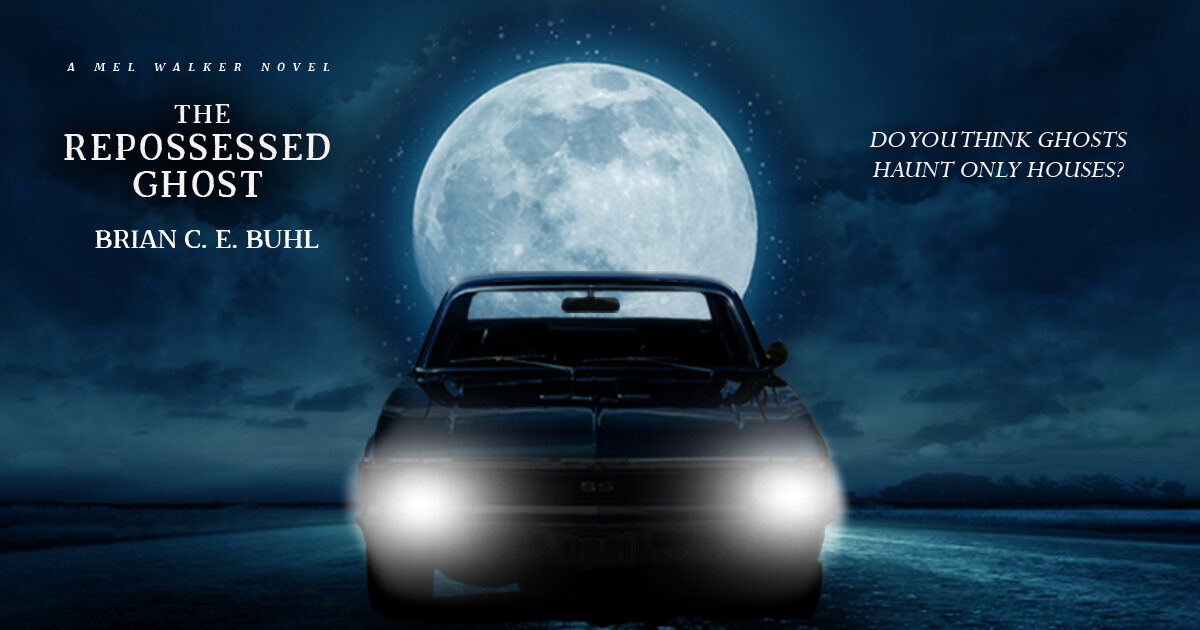
It’s been over a year since I’ve finished any real stories. I can probably be forgiven for some of this year, as publishing The Repossessed Ghost took some time, and it was real authorly work. And I’ve been working very slowly on a follow-up story, and I have plans to work on a sequel novel in November.

But I still feel spread thin. Thin enough that repairing the flat tire on my car slipped through the cracks this morning and I barely noticed. That’s a sign that things are out of balance again.

I’m still going to keep showing up, though. I’m not going to quit.

There are days like today where once I leave the Day Job behind, it is very tempting to just go to sleep and hope for more time the next day, writing be damned. And I can tell you from experience that that way lies depression and burnout.

10/1/23

Blogtober 2023!

It’s the first day of October, and you know what that means!

It means September just ended! And pumpkin spice drinks have already been out for a couple of weeks! The Halloween stuff in stores have been out just long enough to start collecting dust!

And, I’m about to write a blog post every day for 31 days, just to prepare myself for a hopefully successful National Novel Writing Month in November.

I’ve only succeeded at Nanowrimo 3 times but each of those 3 times happened after a successful Blogtober. The effort involved in Blogtober opens me up, getting me in the habit of making hard choices and making time to put words on the page. There is no real narrative in these blog posts. There is no main character. There is just the topic, and whatever my thoughts are on the subject in 300 to1000 word chunks.

Mmm. Delicious chunks.

To have a successful Blogtober, it helps to come into October with a plan, or a list of topics. The topics this month (not necessarily in order):

  1. Welcome to Blogtober 2023
  2. The Continuing Struggle of Being a Creative Person Working in a Technical Field
  3. Romanticizing the Author Life
  4. The Realities of the Author Life
  5. Measuring Success as an Author
  6. Publishing Routes Unpacked
  7. A Day in the Life of Brian C. E. Buhl
  8. Mel Walker Short Story: The Psychic on the Jury
  9. Mel Walker Sequel: Untitled So Far
  10. How to Write a Villain
  11. How to Write a Hero
  12. The Current State of Social Media
  13. Dragon Gems
  14. When Do You Stop Learning to Write?
  15. The Attractiveness of Drama
  16. The Future of Writing
  17. Are People Still Reading?
  18. Roleplaying Games and the Writing Itch
  19. Zombies!
  20. Dehumanization in Stories
  21. People Love People that are Driven
  22. October 22, 2023 Update
  23. Relationships in Stories
  24. Sanderson’s Laws Simplified
  25. The Good and Bad of Audiobooks
  26. How Much Detail is Too Much Detail
  27. The Flashlight Approach to Story Writing
  28. Psychics Versus Mages
  29. Running Away From a Story
  30. The “Buy My Book” Post
  31. Happy Halloween 2023

I have a couple of spare topics to slot in if it I decide any of these are too much alike, or if I don’t think I have enough to say on the subject. For example, the post on Zombies and the post on Dehumanization both have a lot of overlap. I think I have enough unique things to say about both subjects, and I think one leads into the other. I may call an audible in the middle of the month, though, and do something completely different.

I have Mike Baltar to thank for helping me come up with this list. I spent most of the day with him yesterday. We had lunch, then wrote at his place for a little bit, and talked about various writing topics. Thank you so much, Mike!

One Last Thing…

I do not believe that emails have been going out like they’re supposed to. I think the last OS update I did to the server housing my blog may have broken my mail services. The update originally broke this blog entirely, but I was able to put it back together, mostly.

To be fair, my mail server has been complete garbage for about a year already. In the next day or two, I’m going to try and rebuild it. I’m hopeful that the updates won’t mess up the blog again, but there is a chance of interruptions. It can’t be helped.

In other words, I know a handful of you have relied on the blog posts getting email to you, which is currently not working. I’m going to try and get that functionality back, maybe even tonight.

Thank you for your patience while I rebuild some of things behind the scenes!

09/26/23

Writing Women Characters

Initially, I wanted to revisit Gail Simone’s Women in Refrigerators, with a specific look at the term “fridging” and how it is used today. The more research I did, however, the more I realized I had more to say on the subject of writing women characters in general.

Another way to put it: look up “breasting boobily.” Whatever you want to call that, I hope to do the opposite. But mostly I want to help other writers make believable characters that have depth and agency.

Part 1 — What is Fridging?

Let’s begin with the thing I wanted to talk about in the first place, which is the term “fridging.” We will start with where the term came from, its original meaning, and how it is being used today.

Gail Simone, an excellent writer and probably not a bear, observed that a number of women characters in comics were being killed or abused in order to advance the plot of their male counterparts. The observation began with Green Lantern #54, in which the Green Lanter of the time, Kyle Rayner, returns to his apartment to find his girlfriend, Alexandra DeWitt, dead in the refrigerator. The death takes place out of frame, and we witness the revelation of the death through the perspective of Kyle.

There are lots and lots of examples of this in the comics. The term grew out of these observations and is common enough that I probably didn’t need to explain it to you.

To put it another way and give it a plain definition, fridging is another type of objectification, in which the women are denied agency and only used as plot devices for male characters. This happens with people of color and other marginalized folks, but I have only seen the term applied to women characters.

Part 2 — Why Do I Want to Talk About Fridging?

There are two reasons I want to talk about Fridging. First, I believe people are misusing the term and watering it down. I see people using the term whenever a woman character is killed, regardless of the circumstances.

For example, I saw a lot of people say that Black Widow was fridged in Avengers: Endgame. This strikes me as remarkably unfair to Black Widow. The audience knew as soon as the sequence began that someone was going to die, and Black Widow and Hawkeye both tried to throw themselves off the cliff to save the other person. In that sense, it was a heroic death that took place on screen. The character didn’t die because she lacked agency; she died because she chose to and was able to outplay Hawkeye.

Also, fridging usually happens at the hands of a male writer. I might have this wrong, but I believe the decision to kill Black Widow in that scene came from a woman editor.

Misusing the term not only dilutes it. It leads people away from the main issue, which is that women characters exist not merely to act as motivation for men. Women characters are characters and should be allowed to have depth and all of the stories and plot points that male characters enjoy. This includes heroic deaths.

Part 3 — Why Else Do I Want to Talk About Fridging?

The other reason I bring up fridging has to do with The Repossessed Ghost, and a review that made me doubt myself.

I didn’t seek out the review. I don’t believe it’s posted to Amazon or Goodreads. A very nice lady ordered my book after meeting me at a writing event, and she texted me what she thought of the book. She liked it! Gave it 4 stars on Amazon and praised the world building.

Here is what she said that unsettled me: “As a woman reader, it would have been nice to have at least one woman character who isn’t a victim of domestic violence.”

Yikes.

It made me question everything. Do I have some kind of unknown dislike for women? Am I bad person?

Did I fridge Kate?

For those that have not read the book yet (and it’s okay if you haven’t, but I do wish you would), Kate is the ghost that the main character, Mel, meets at the very beginning. As a ghost, Kate shares the adventure with Mel. She is, in fact, the titular character. This is not a spoiler. The repo and introduction literally happens in the first chapter.

Kate dies before the book begins, so did I fridge her?

I would argue that I do not. Kate is not objectified. While her agency is somewhat limited by the predicament of not having a physical body, she still affects the story significantly. There is more I could say about her and her agency (and even her death), but that would get into spoilers.

Part 4 — How to Write Women Characters

To avoid fridging, write a fully realized character.

That’s really all there is to it. Focus on the character and not the gender.

This sounds crazy and reductive, but if you are good at writing a male character, just do whatever you’re doing to make them fleshed out and give them a woman’s name. You may or may not be surprised at how little gender matters for most characters in a story.

If you don’t believe me, look at how the script for Alien was written. All of the characters were created essentially gender neutral, so when casting, they could pick any actor for any of the roles. Ripley being a mother wasn’t added as part of her backstory until the second movie.

What makes a woman character a woman? You can ask the same question about what makes a man character a man. Answer: it’s not their genitals.

When I sit down to write a man, I don’t worry about whether or not they’ll come off as masculine. I determine what they want, what they’re willing to do, and I put them in scenarios that test them. As a man, I feel like I can write another man with authenticity.

When I sit down to write a woman, I treat them exactly like I treat my male characters. I give them wants and needs. I figure out their voice. And I put them in scenarios that test them, too.

If I stop and think of what my women characters have gone through, in isolation, it looks like I’m really mean to them. If you compare them to how my male characters are treated, however, the scales balance.

Are women more sensitive? Some are!

Are men physically stronger? Not always!

It is easy to fall into stereotypes when creating new characters and applying gender. It is also simple to step into cliche. My recommendation is to leave that at the door and make characters that are realistic and exceptional at the same time. Give them a unique voice and your audience will love them, regardless of their gender.

Part 5 — In Summary…

In summary, do not objectify your characters. That is the heart of what it is to fridge them. Make your characters leap off the page. Give them quirks and strengths and weaknesses. Ask them what they want. Spend most of the book denying them, unless giving them what they want would make things worse.

Finally, go read The Repossessed Ghost and tell me what I got wrong and what I got right when crafting my women characters.

09/9/23

Somewhere On The Writer’s Journey

One of the things I love about the Writing Excuses Retreat is that the stratification between guest and host is not severe. There is some separation, but the hosts do an excellent job making us feel like we are all writers on the same journey; some are just further along the path than others.

I have found that I get the most out of these retreats by volunteering. It makes me feel like a more active participant, and in some small way, I feel like I’m giving back to this community that has already given me so much.

This year and last, I volunteered to help with Office Hours, which is just a time in the morning when some of the hosts go to a designated area and give one-on-one advice to people in 15 minute chunks. For anyone taking advantage of these times, it is invaluable, and it can be a real highlight of the entire trip. Volunteers help set up the space and manage the sign-up sheet, basically just doing their best to make sure that chaos doesn’t overtake the space.

This morning, thanks to the time change and the earlier start time, we only had one host available to offer their advice. One host and a shorted time meant only 3 time slots available, and they filled up fast, leaving a small number of writers looking to talk to somebody. I wound up sitting with someone and talking with them for 15 minutes about my experiences working with a small publisher, and some of the things I’ve learned over the last decade in the querying trenches. I wasn’t trying to pretend to be something I’m not. Regardless, it felt really good to give something back, and my conversation partner told me that I really helped her find some direction with the book she’s trying to publish.

I’m somewhere on the path. I have a long ways to go, but I’m not at the beginning anymore. I’ve made some progress, and I can share that progress with others. I’m happy to do so! With humility, though I have to admit I am quite proud of what I’ve accomplished so far.

This time on the cruise, I’ve been motivated to look at where I am on the path. I’m surrounded by other writers. Many, if not most, want what I have, which is a published novel. I’m not asking questions about how to write the story as much as what to do with it once it’s done.

Speaking of my book, I’ve made a conscious effort to talk about my book on this trip, but not shill it. This is a wonderful, welcoming community, and they’re happy to celebrate my success with me. With that in mind, I feel like it would be wrong to push my book here. There is a subtle difference, and this isn’t the time or place for certain types of self-promotion, and I feel like I’ve done a decent job of it.

It is Saturday. The end of the cruise and the retreat is in sight, and I’m sad to see it go. Time becomes elastic in this kind of environment, and sometimes the only way a person knows what day it is is by reading it off the tile in the elevators, changed nightly. This time, I can feel the end approaching, and I wish I had more time to write and relax. I’ve done a bad job at both this trip.

If you ever get a chance to go on one of these retreats, I highly recommend it! Wherever you are on your writer’s journey, you will find something here that helps you see the way more clearly.

09/2/23

Post Publishing Funk

A couple of weeks ago, I wrote about being in a bit of a funk, and attributed it to the kind of work I’m doing with my Day Job. It’s all true, but there is more to it. I’ve been putting off talking about it, but since I’m just a couple of days from Writing Excuses Retreat 2023, I might as well get into it now.

Part of being a writer is selecting and striving towards bigger and bigger goals. Mine went something like:

  • I want to write a real story
  • I want to write a story I can enjoy
  • I want to write a story my friends can enjoy
  • I want to finish my first novel
  • I want to finish another novel
  • I want to finish another novel, this time in a different style
  • I want to publish one of my stories
  • I want to publish one of my novels

At first, I described these as dreams, but the difference between a dream and a goal is how much effort you put into achieving it. I still have untouched dreams, such as:

  • I want to write fulltime and survive
  • I want to win a prestigious award for my writing
  • I want to make the New York Time’s best seller list

There’s nothing wrong with wanting these things. I have no expectations on these dreams. I believe I’m talented, and I can work towards some of these dreams, but most of these are outside my control.

This ties back into that funk I was talking about before. As long as I’m alive, I’ll be writing. But I need a new goal. I need something to aim for, that is more than just write and pray. I don’t know what that is.

Publishing The Repossessed Ghost achieved one of my dreams, and it still brings me joy to look at this physical copy of a book that has my name on it. Nothing is going to take that away from me.

More people than I expected have read it and they seemed to genuinely like it. I’m surprised at how many people have talked about starting it, and then finishing it within a day or two.

I kept my expectations relatively low, and The Repossessed Ghost has done better than my expectations. It’s not going to win any awards. It’s not going to climb up any lists. It delighted a few friends and friends of friends, and it sets the stage for more books and stories.

I’m working on a short story in which Mel is selected to be on a jury. It’s fun, and it’s possible I’ll finish it this next week. I’m planning a direct sequel to The Repossessed Ghost. I still have more outlining to do for it. Perhaps that will be my NaNoWroMo project this year. I’m not sure.

After that, I don’t know. I’m greedy. I want more. I want The Writer’s Life, whatever that means.

This week, I hope to find some kind of answer to the question, “Okay, what do I do now?” It’s probably something along the lines of “keep writing” and “find an agent.” I’m going to get a chance to talk to Dongwon Song, and I expect he’s going to tell me to define what kind of writing career I want to have.

That’s all I have for this topic at the moment. I may post a follow-up later this week, based on the conversations I have while on the ship. Also, I’m planning on writing something about agency and fridging, as coined by Gail Simone. I have some thoughts, but I have to do some more reading first.

08/13/23

Different Mountains of Work

I’ve been in a bit of a funk for the last week or so. I’m really good at giving myself misery. The funk mostly comes from the kind of work I’m having to do with my Day Job. It really has me down, which leads to me thinking all sorts of dark thoughts.

At the moment I’m dealing with the funk by sitting in a Starbucks with Michael Gallowglas. We’re both working on different writing projects. He’s writing in a notebook with different colored pens. I’m typing on a keyboard I made myself, filling in a post for a blog that I’ve been maintaining for over 10 years. From a certain perspective, our writing is a never-ending pile of work.

Unlike the Day Job tasks, when I look at all the writing I want to do, I don’t feel dread. I don’t feel overwhelmed. It’s the opposite, actually. I look forward to the writing. I’m glad I have so many writing projects in front of me, and I look forward to those times when I have the energy and time to invest.

Yesterday, I spent most of the day moving things around in my garage. It’s labor that I’ve needed to do for some time, but I kept putting it off. I still have more to do, and sneaking off to Starbucks is a way for me to put it off further. There is a lot of work to do, but at some point yesterday, I stopped dreading it so much. I started to see the benefits of having a clean space in the garage, with things put in their right place. There is value in getting everything in order out there, because it also means I’ll get to work on keyboards again.

Looking back at my Day Job, things there have changed in such a way that there is always a mountain of work in front of me. It is overwhelming and discouraging, and I’m starting to hate my job. I’m not sure how much longer I can keep going like this, and I’ve been there long enough that I’m afraid that anywhere else I go will be just as bad or worse. Furthermore, I don’t think I’m as good a programmer as I was five or ten years ago. I’m still extremely valuable to my current employer, even though the work has changed to something I cannot stand.

It would be really nice if I could make writing my day job.

I’m not afraid to work hard. I look forward to it. I just want it to be work that I believe in, and that fulfills me. We should all be striving for that. In a perfect world, all of our basic needs are taken care of, leaving us to pursue our passions so that we can make the world an even better place through our art and the things we love. Maybe that isn’t a perfect world as much as a fantastical one, but it’s still worth pursuing.

There is a difference between work that is put on our shoulders versus the work that we pick up ourselves. I’m looking forward to getting home and getting the rest of my workspace in order so that I can work on a keyboard that I intend on giving away at the Writing Excuses Retreat at the beginning of September. There is a lot of effort between here and a finished product, but that effort will satisfy me and leave me feeling fulfilled.

And even some unexpected work can be a treat if it’s the right kind of work. To bring this full circle, the keyboard that I’m using right now needs work. I accidentally left it in the car for the last week, and the Sacramento sun did some very unfortunate reshaping of the thing. It’s still full functional, but the case is cracked and warped. It looks like ass. I discovered it in this state a few minutes ago, and what I see is an opportunity to reprint it, rebuild it, and make it shiny and new again. It’s a lot of work that I didn’t expect, but I kind of love it, all the same.

08/5/23

Permission to be Wrong

If you’ve spent any time at all on the Internet, you’ve probably seen someone state information that is completely incorrect. They may or may not be stating this information with a degree of confidence. Perhaps it’s a comment on a YouTube video. Perhaps it is a blog post, like this one. How do you respond? What is your emotional journey when presented with something you know to be false?

Have you ever been wrong on the Internet? What was that experience like for you?

From what I have observed, the greatest sin on the Internet is to be wrong about something, or hold to an unpopular opinion. This is what I want to address today, sort of as an exercise in empathy.

Basic Ignorance and XKCD

Let’s start with basic ignorance, and Randall Monroe‘s take on it:

If you read much XKCD, you’ll find a genuine enthusiasm for learning things. The first step in learning is admitting that you don’t know a thing, that there is a void in your knowledge, and then the process of learning is what we do to fill that void.

I find that basic ignorance is relatively easy to forgive.

Just now, I described ignorance as a void in our knowledge. Sometimes, we can ignore that void. Other times, we bridge over it with assumptions. Let me give you an embarrassing example.

How the seasons work

I was deep into my 20’s before I learned that the seasons were opposite between the northern and southern hemispheres. I knew that the Earth was tilted on its axis, but I didn’t attribute the changing of the seasons to that tilt. Maybe I wasn’t taught that part in school, or maybe I wasn’t paying attention that day. I don’t know that I have an excuse.

I knew we had seasons, and I knew the Earth rotated around the sun, and that our orbit is somewhat elliptical. In my mind, it made sense that in the summer, that’s when the Earth is closest to the sun, so I assumed that the seasons were entirely driven by Earth’s proximity to our nearest star.

How was I corrected? I was talking with someone about writing a weather system for a game, and it grew into a very technical discussion on how to implement the system according to the tilt along a planet’s axis. My conversation partner was a genuine rocket scientist, and she was alarmed to discover how wrong I was on this subject.

She was alarmed, but she wasn’t cruel. She tried to correct me, and I provided some resistance at first, because my assumptions were deeply embedded. I wasn’t rude, and then I learned something, and I felt embarrassed.

Knowledge is knowledge, ignorance is ignorance

The example I just gave is a fairly harmless subject. We were literally just talking about the weather. I want to suggest the idea that the subject doesn’t matter when it comes to knowledge or ignorance. We have either learned something, or we haven’t, and that regardless of the subject, it is not a moral shortcoming.

A more harmful subject would be around homophobia. Some simple facts that homophobes do not know: homosexuality isn’t a choice, gay people have the same feelings as straight folk, exposure to literature that features homosexuality does not make a person gay. There are lots of facts a homophobe may not be aware of, actually, but that seems like a good list to start with.

Why am I choosing this particular topic? Because it is another one in which I was the ignorant asshole. Correcting that ignorance has had a profound impact on my life.

I grew up in the 70’s and 80’s, and my parents were conservative. In my teens, I had a girlfriend that went to church, and then I started going and became a bit of a Bible thumper myself. The environment I grew up in wasn’t particularly cruel to gay people, but it was not kind or empathetic, either. No one sat down and had a conversation with me about homosexuality. The subject wasn’t brought up until I went to church, at which point, I was taught it was a sin.

During that time, using “gay” as a derogatory descriptor was not out of the question. It was in my vocabulary. And I didn’t really think about it.

Fast forward to early 1994. I had not met Melissa yet, and I was stationed at Holloman AFB, where “there is a beautiful woman behind every tree.” I was still feeling trauma after a painful breakup, and I was single and lonely. That’s when I found out my high school friend Nancy was going to school in Phoenix, which was just an easy 6 hour drive away. There had never been any kind of romantic attraction between Nancy and me, but you can bet I contemplated the possibilities during that long drive to go visit her.

We met and had a good time. We talked about High School, and cars, and what it was like for each of us escaping Oregon. Then, back at her apartment, she opened up to me. She trusted me enough to tell me about her girlfriend.

I didn’t blow up or yell at her, but I didn’t respond very well. I was not understanding or supportive. Honestly, I don’t remember what I told her. I probably regurgitated some garbage I’d picked up from church. I didn’t raise my voice, but I did make her cry.

That gave me another 6 hour drive to think about things, and I knew I’d somehow made a mistake. I hurt my friend. I didn’t mean to. But I hurt her, and to this day, I haven’t spoken to her since. I wish I could. I truly hope that she’s happy and free to be herself, the true self she was born to be.

Ignorance is forgivable, but actions have consequences

The consequences of my actions were that I lost a dear friend and have a weight of regret to carry in my heart for the rest of my days. What I did or said in ignorance was light by comparison to what we’ve seen bigots do in recent years.

I want to make it clear that it is okay to be wrong about something. The ignorance is forgivable. But you are still responsible for what you do in your ignorance. The ignorance itself is not an excuse to be cruel or do evil.

We are always responsible for our actions, no matter how ignorant we are while we’re doing them.

What to do when we find an ignorant person

For starters, try not to attack them.

I’ve given two examples of my own points of ignorance, and in neither case was I personally insulted or attacked for what I did not know. When you start with personal attacks, the other person’s mind closes. They stop listening. They are no longer capable of learning. All they can and will do is defend their position, regardless of how little standing they have.

Everyone has their pride. If you allow someone to hold onto their pride, they are more likely to retain the information they are given.

All too often, I see people get absolutely dog-piled for saying something stupid on the Internet. They get called names. They get insulted. They are torn down. They are given no room to retain any sort of composure. It’s like people want to make an example of them, and keep other ignorant people from speaking up.

My words here are not going to change the way people behave on the Internet. However, if you’re reading what I’m saying, and sometime in the future you find yourself presented with a person that is espousing something wildly inaccurate, please take a moment to consider why they might be so wrong, and what will happen if you attack them for their wrongness.

That’s probably all I have to say on this subject for now. Please be patient when you can. While I implore everyone to treat each other with a greater amount of kindness and empathy, I know that this is a big ask sometimes, and it’s okay to just ignore someone’s mistakes and ignorance, too. There are a lot of ignorant people on the Internet, and it is not your responsibility to correct everyone.

08/3/23

A.I. in 2023, Continued

A couple of days ago, I wrote down a bunch of thoughts on A.I. I didn’t really get into how it works. I talked about what it produces, and how it is best to use it to assist artists rather than replace them. By not talking about how these large language models work, I skipped right over the biggest issue with this software, so that’s why I’m revisiting this topic so soon.

Current A.I.’s are trained on tremendous datasets. ChatGPT would not be able to create a story in the style of Mark Twain if it wasn’t fed a bunch of Mark Twain stories. Art A.I.’s are trained on art in much the same way. We feed a huge amount of data into the machine, and then based on what we’ve given it, we ask for extrapolations from its datasets in order to generate a “new” product.

It’s the training data where things get spicy. Were the writers and artists that produced the work that is fed into the machine asked if their work could be used in such a way? If not, how is that not theft?

As I said just after my birthday, you cannot copyright style. But let’s not be cowards and hide behind the law. Is it moral and right for Grammarly to feed its A.I. using customer data? Is it okay for Google to scan emails and Google Drive documents in order to feed its A.I.?

The cost to acquire this technological marvel is the dataset that is fed into the machine. These large companies are taking a socialist approach to handling that cost, but then preparing to turn around and sell the product in the most capitalist way. That’s one way to look at it, a way to unemotionally determine that what is happening with A.I. is wrong.

But fuck unemotional. No one wants their voice stolen and then reused without their consent. A writer or artist brings their voice to the material of their stories and their art. When we talk about an artist’s voice, are we not talking about style? Isn’t that what we’re training these machines to duplicate?

In my previous post, I truthfully state that I think the technology has the potential to be amazing. It does. Now I’m saying that the technology comes with a price tag, which is that your art, stories, and voice will get used, poured into a digital stew and served up to a machine god that will always be hungry for more.

Would it make any difference if the A.I. created from all of our combined voices could not be used to create profit for someone else?

I think that would help, but it wouldn’t solve the whole problem. I put this blog up for free, and I’m always hoping that my words will enter other people’s eyeballs or ears and provide pleasure or sustenance to someone else’s brain. If someone (foolishly) trained an A.I. using all of this publicly accessible version of my voice, even if they didn’t make a dime off of it (which they wouldn’t), they still stole my voice. Maybe I’d be okay with it if they used my voice to create some kind of public good. I think I would still want to be credited, or have some say in how my voice is used.

In summary, once again, I’m a fan of the technology in principle, but I am not a fan of how the technology is built. I think there are still questions of morality around building A.I. using the work of other people. And I still believe that artists, writers, and programmers are going to be hurt by this technology as companies learn to really misuse it.